NOTES
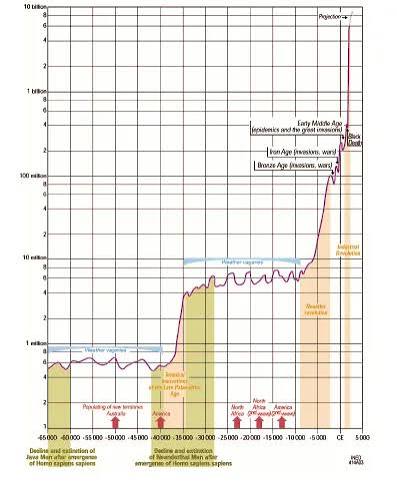
- Bottleneck ocurred during a roughly 117,000-year period, human ancestors may have dropped from 100,000 to a breeding population of just about 1,280 individuals, wiping out 99% of all human ancestors and bringing the lineage close to extinction; discovered by modern DNA analysis.
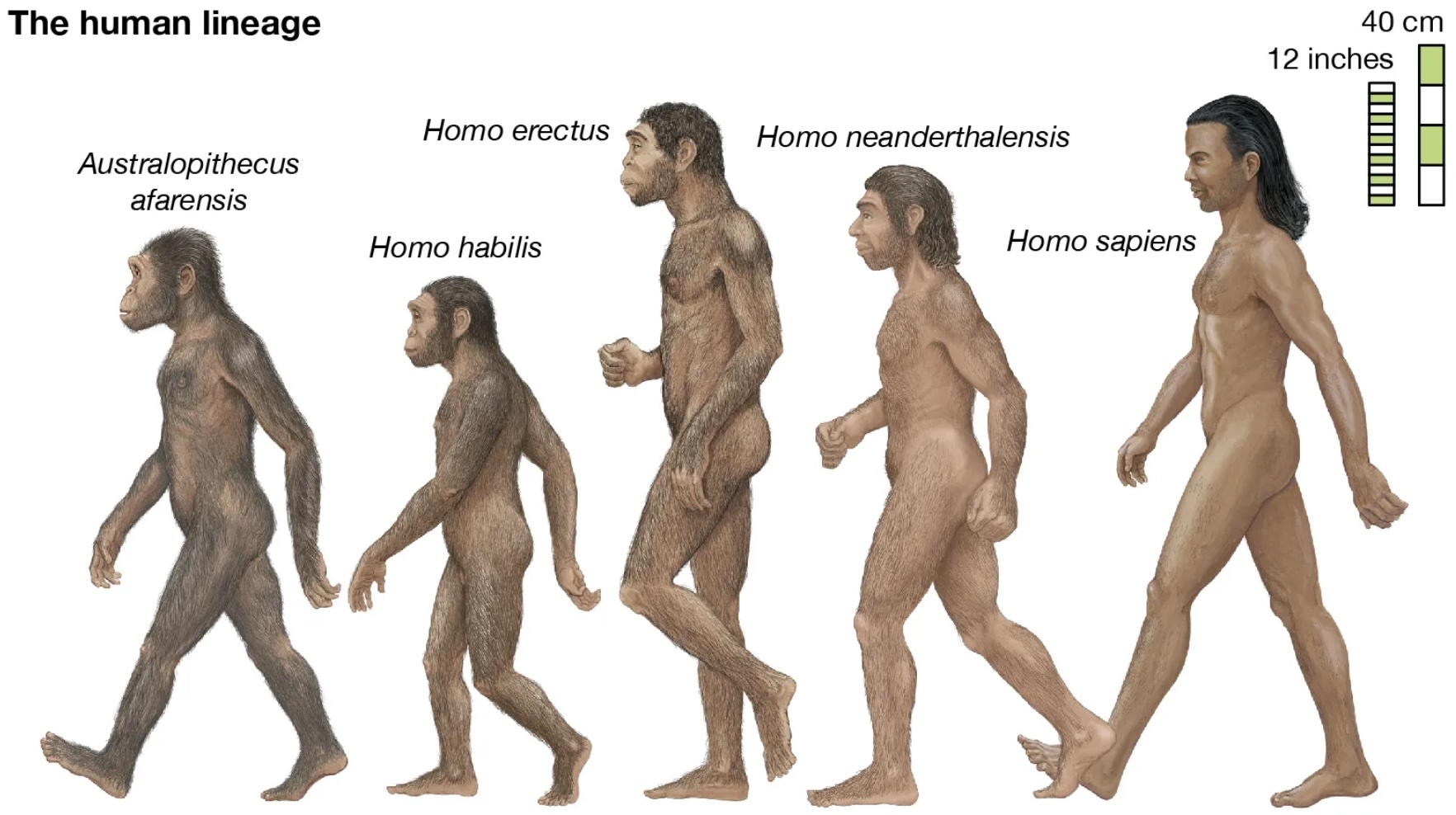
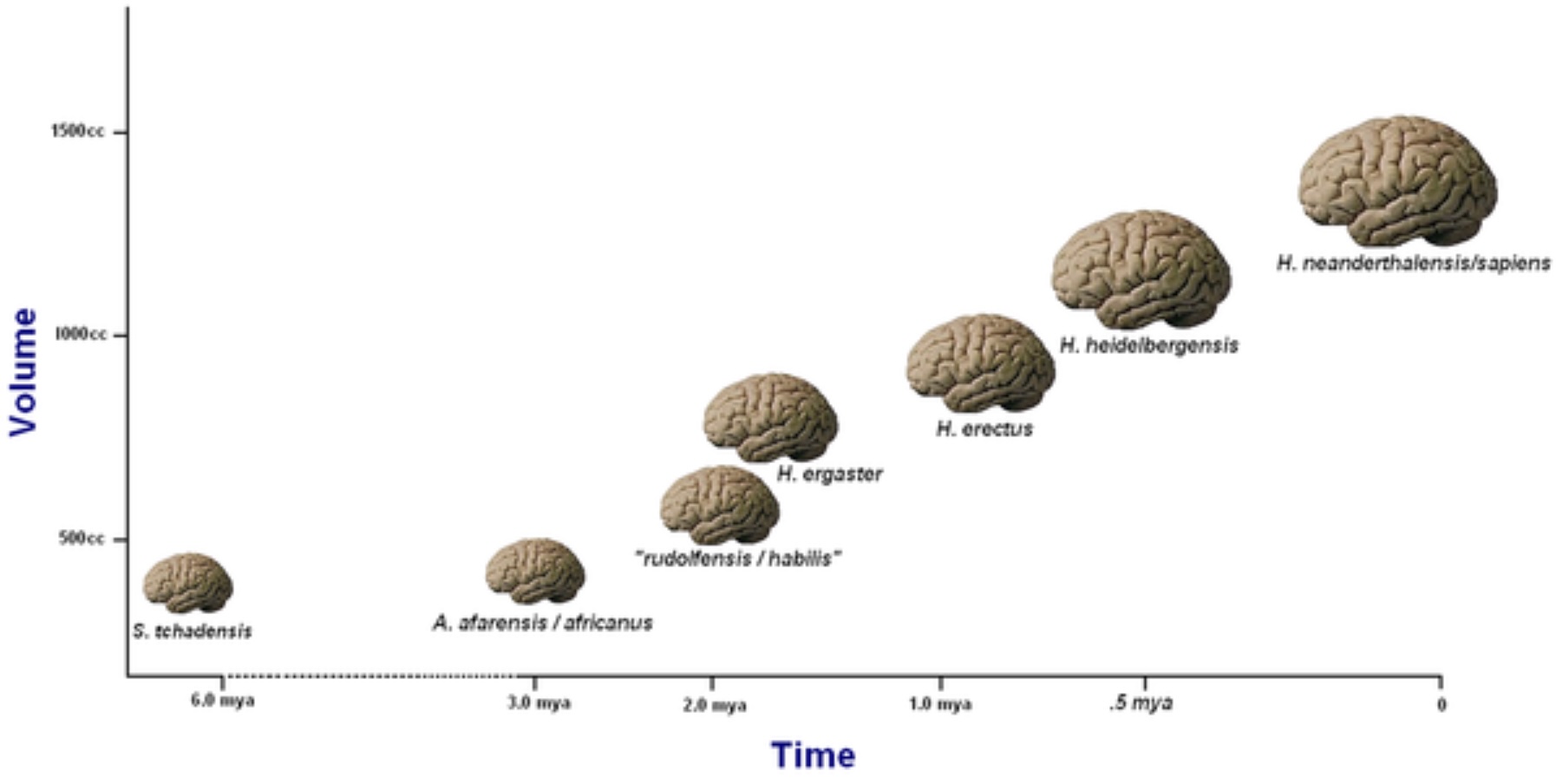
- Afarensis means "Southern Ape from Afar". A skeleton was discovered in Ethiopia in 1974 and was named "Lucy".
- Habilis was known as the "Handy Man" because scientists discovered simple stone tools near its fossilized remains. They were first discovered in Africa in 1959.
- Ergaster was known as the "Working Man", reflecting the advanced stone tools associated with the group. A very complete skeleton called "Turkana Boy" was found in Kenya in 1984.
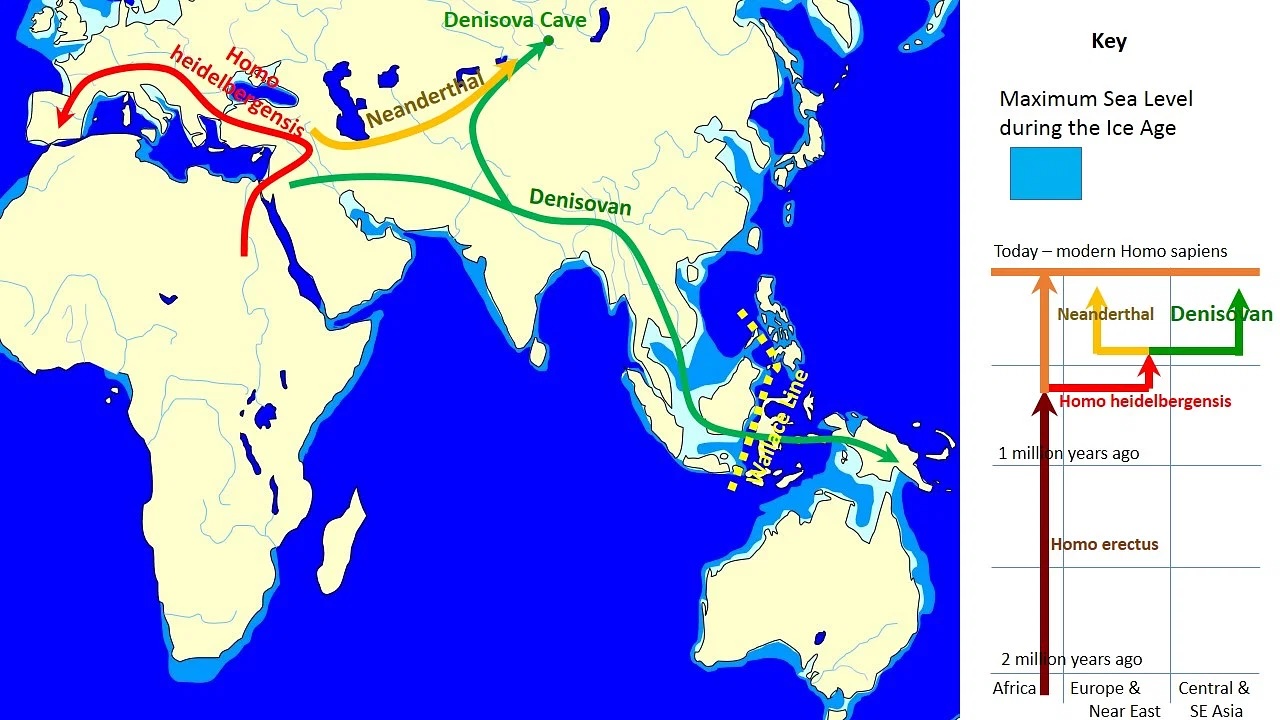
- Erectus known as the "Running Man", were the first human relatives to leave Africa and travel across Europe and Asia. They ran down their prey through a strategy called persistence hunting, using exceptional long-distance endurance to exhaust fast animals in hot climates.
- Heidelbergensis is also referred to as Archaic Homo Sapien. They were the first early human species to routinely hunt large animals, using refined stone hand axes and wooden throwing spears.
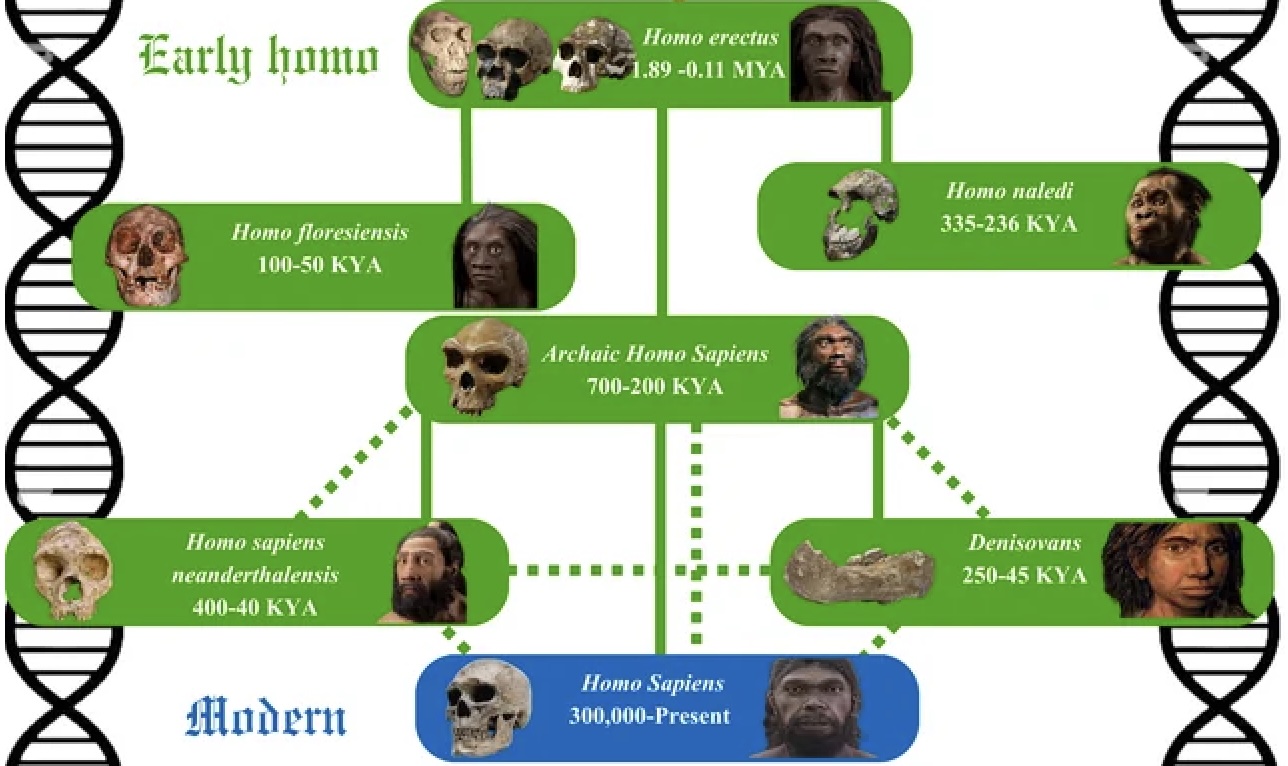
- Naledi is an extinct human relative from South Africa with a unique mix of primitive, ape-like traits and modern, human-like characteristics.
- Denisovan migrated to Asia and their DNA is found primarily in populations of Oceania, Indigenous groups in Asia and the Americas, with the highest concentrations (up to 5% to 6%) in Melanesians, Aboriginal Australians, and Filipino Negritos.
- Neanderthal lived mainly in Europe and their DNA is found in most modern humans outside of Africa with 1% to 2% and evolved from the Heidelbergensis in Europe. Mexican people carry both Neanderthal and Denisovan DNA.
- Sapien meaning wise man, is the species to which all modern human beings belong.
- Floresiensis is nicknamed "the hobbit," a tiny-bodied, 3 foot tall species that lived exclusively on the island of Flores in Indonesia.
- DNA research shows that all living humans share a single common maternal ancestor, widely known by scientists as Mitochondrial Eve, who lived in Africa roughly 150,000 to 200,000 years ago. We inherit nuclear DNA from thousands of other ancestors, but only her mitochondrial signature survived in everyone today.
- DNA research shows that all living men trace their direct paternal line to a single male ancestor called Y-chromosomal Adam, who lived in Africa roughly 200,000 to 300,000 years ago.
|